Step inside one of France's most mythical venues. Since 1893, Olympia de Paris has witnessed the rise of French and international music, survived wars, near-bankruptcy and threatened demolition — and emerged as the ultimate symbol of live performance in Paris.
How was Olympia de Paris born?
Olympia opened in 1893, founded by Joseph Oller — the same visionary entrepreneur behind the Moulin Rouge. From the outset it was conceived as a music hall welcoming acrobats, contortionists, dancers and, above all, cabaret artists. Stars of the Belle Époque such as La Goulue and Mistinguett performed there regularly until World War II.
After the war years — during which the venue was occupied successively by German and US forces and converted into a cinema — Olympia's great revival came in 1954, when Bruno Coquatrix was appointed director. He brought the stage back to music and spectacle, and under his leadership the Olympia became something far greater than a concert hall.
How did Bruno Coquatrix turn Olympia into a legend?
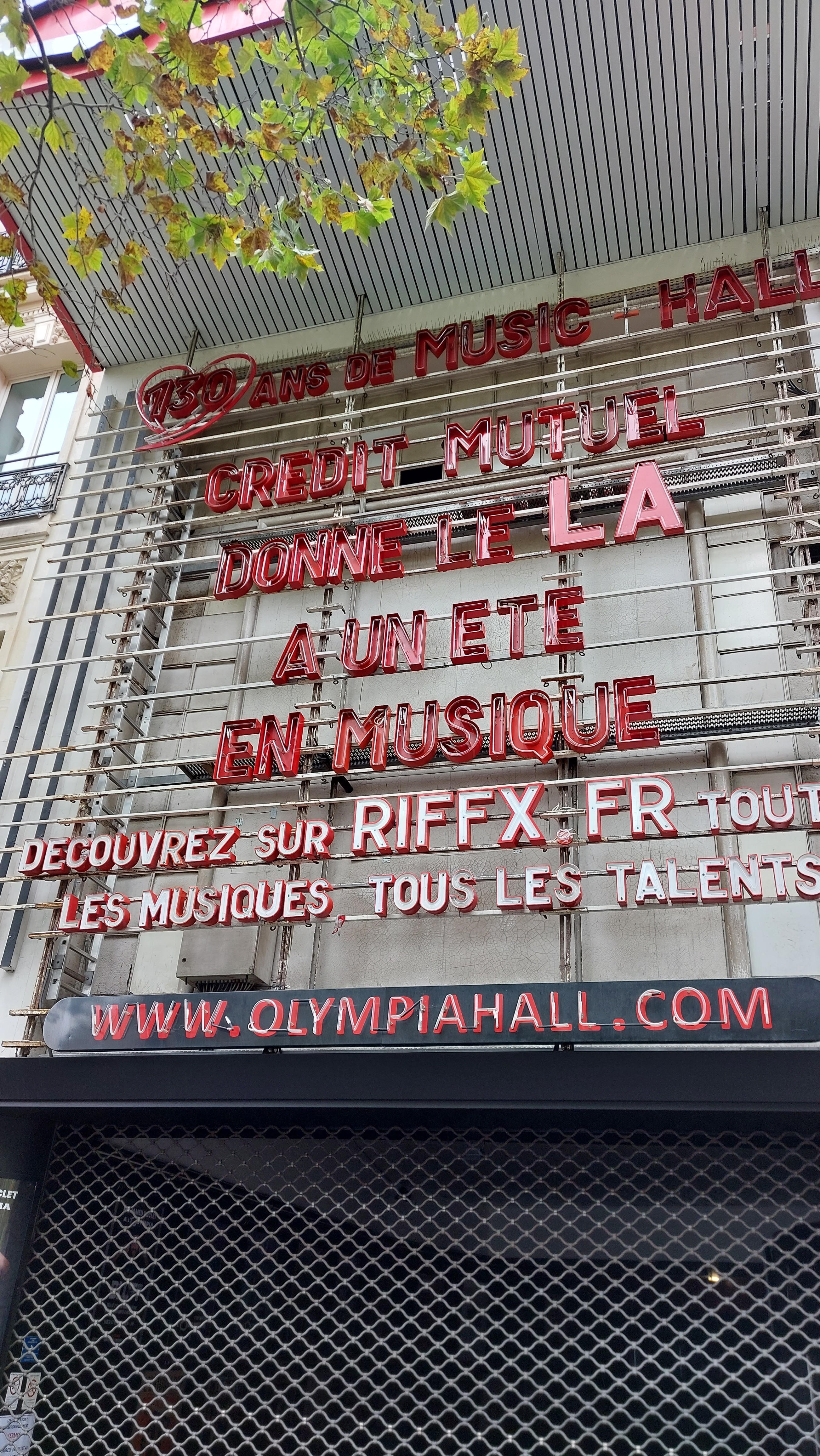
Bruno Coquatrix made performing at Olympia the ultimate ambition for any French artist. In his own words, “any artist dreams of seeing his or her name in Olympia's large red letters” — the mythic crimson letters still changed by hand on the facade before each show.
Gilbert Bécaud ignited the venue in 1955 and eventually performed there 31 times. Michel Sardou went further still: 340 performances at Olympia over his career, including an extraordinary five consecutive months as headliner in 1995. The venue, however, nearly disappeared: in 1961, on the verge of bankruptcy, it was saved only by the presence of artists such as Joséphine Baker, Édith Piaf, Jacques Brel and Johnny Hallyday.
How was Olympia saved from demolition?
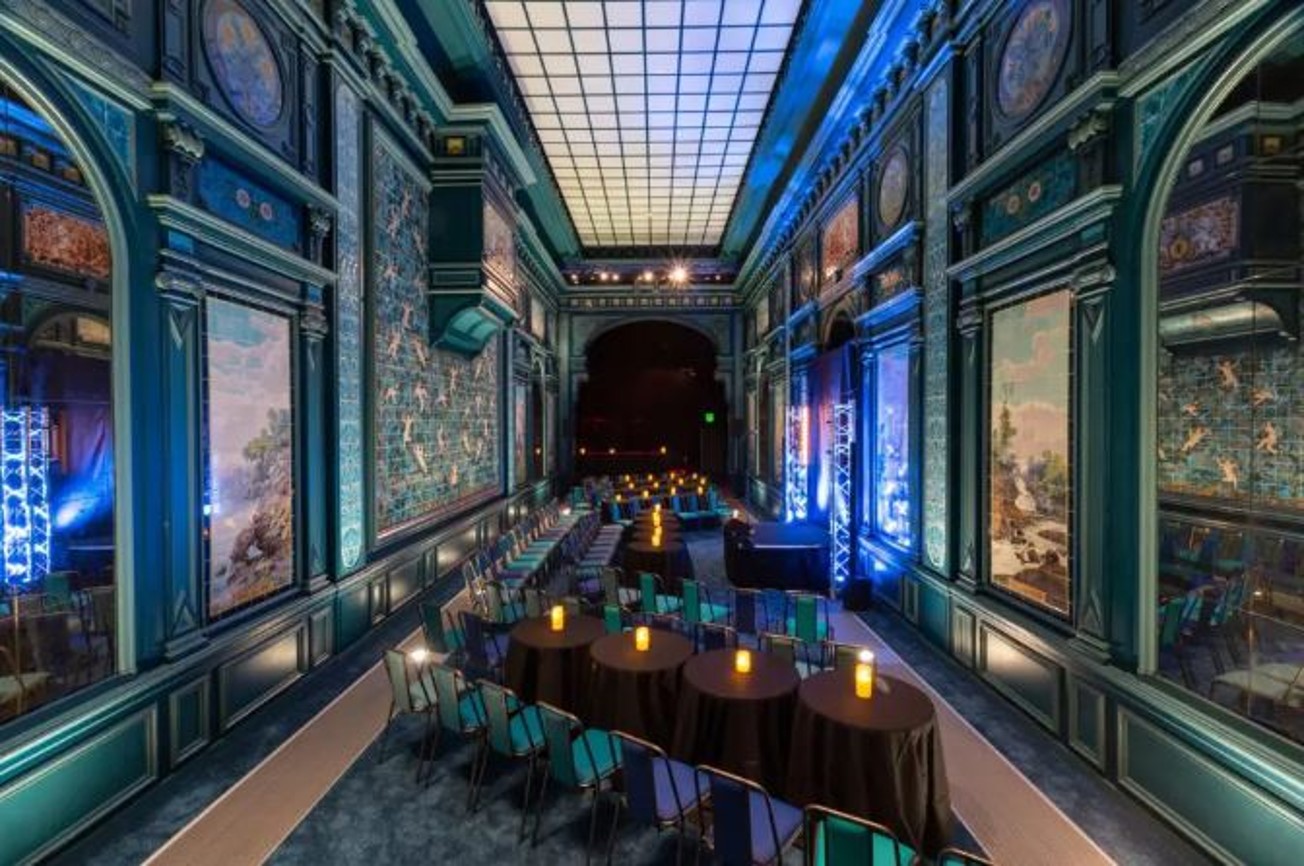
At Bruno Coquatrix's death in 1979, the fate of Olympia looked bleak: demolition, or conversion into a car park, seemed likely. The venue was rescued by an unlikely architectural hero — the Salle du Billard (Pool Table Room), built in 1893 in honour of the King of Scotland, which had been classified a Historical Monument. That protected status shielded the entire building from destruction.
Olympia was subsequently rebuilt: the original facade was preserved, the stage pushed back 30 metres, and the floor level slightly lowered — the entire reconstruction completed in just seven months. The performance hall (business assets) is today owned by the Vivendi Group, who acquired it from Coquatrix's widow in 2001 for the equivalent of €13M in today's value. The real estate itself belongs to Société Foncière Lyonnaise, which also owns the Square Edouard VII business centre next door.
Fun facts about Olympia de Paris
- The “O” logo and Paris itself. Olympia's iconic “O” is said to represent the ring road of Paris — the shape of the city seen from above.
- The Hands Gallery. In 1997, at the “demolition party” marking the latest renovation, a secret Galerie des Mains was created: plaster casts of artists' hands, à la Hollywood Walk of Fame — and just as exclusive.
- The Pool Table Room as an audition stage. The Salle du Billard that saved Olympia from demolition was also where Coquatrix and his team auditioned young artists in their early careers — including a certain Johnny Hallyday.
- Workers applauded by fans. The workers who climb the facade to change the red letters by hand are sometimes greeted by fans who arrive two days early for the most anticipated shows, and are given a round of applause for their work.
Key figures
| Founded | 1893 |
|---|---|
| Capacity | Up to 2,800 (seated + standing configuration) |
| Shows per year | 280 to 300 |
| Annual attendance | ~500,000 spectators (2023) |
| Record performer | Michel Sardou — 340 performances |