
Planning to attend a show at the Folies Bergère? This guide answers the most common practical questions to help you make the most of your evening — how to get there, what to wear, where to sit, where to eat. And if you're curious, we share a few stories about this legendary venue. After the show, our Chess Studio and Duc de Choiseul Flat are just minutes away on foot — the perfect way to end a Parisian night.
Folies Bergère: Paris's First Music Hall
Take a moment when you arrive on Rue Richer to look up. The Art Deco façade, designed in 1926 by Maurice Picaud, is adorned with a golden bas-relief: a dancer arching backwards, frozen in a cabaret movement — it is a listed historic monument, and endlessly photographed! Opened in 1869, the Folies Bergère is the very first music hall in Paris, the model that inspired the Casino de Paris and the Moulin Rouge, among others. It was here that women (the English Sister Barrison troupe being among the first) took to the stage to dance the French cancan, and here that Mistinguett, Maurice Chevalier and Joséphine Baker shone. Attending a show today means sitting in over 150 years of living performance history.
What to Wear to the Folies Bergère?
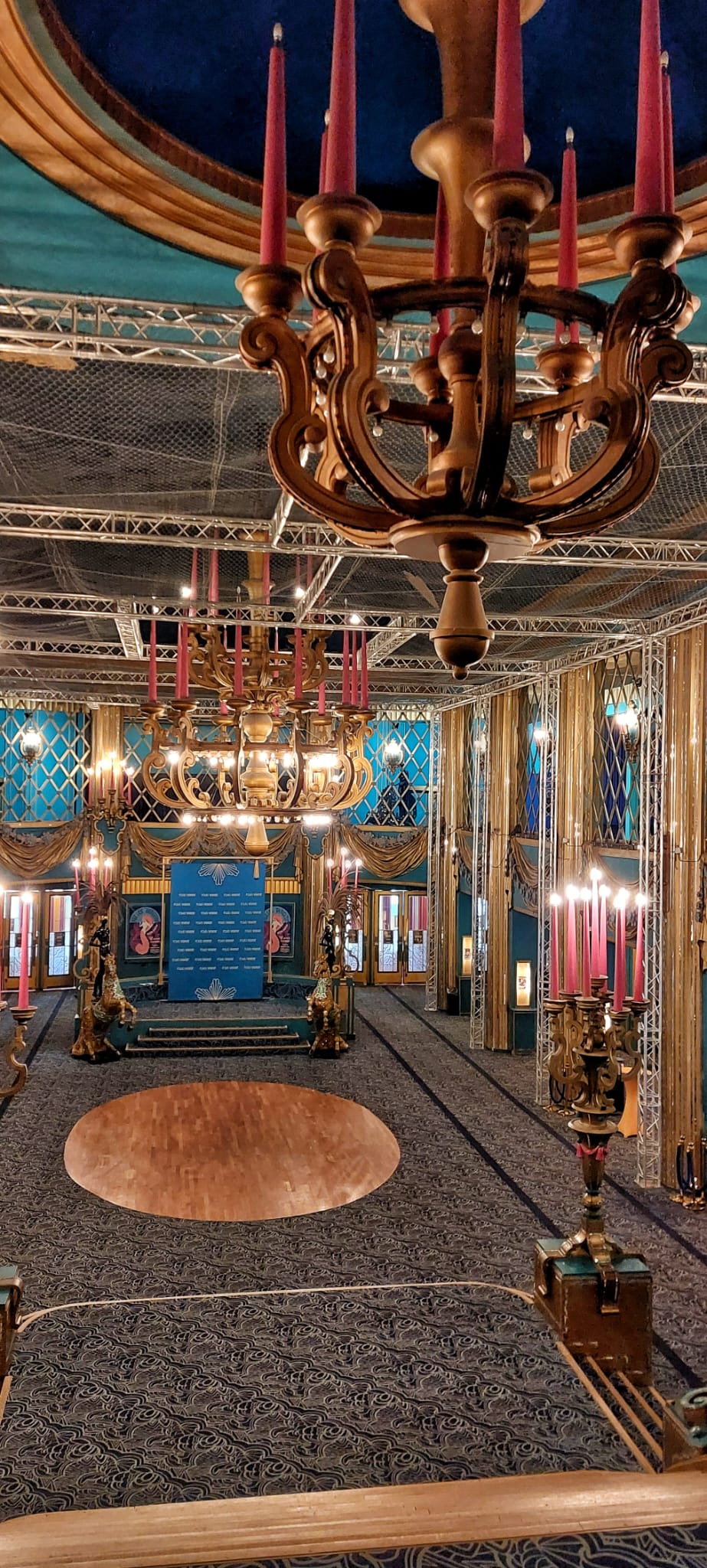
Good news: there is no strict dress code. No tie or evening gown is required. You can admire the "Gabrielle" costumes displayed in the grand entrance hall — elaborate backpiece wings that performers wore on stage, and very little else. The venue is elegant and steeped in history, so most audience members do dress up a little for the occasion. A smart casual outfit is perfectly appropriate, and it's a nice excuse to make an effort for a special Parisian evening. Inside, a paid cloakroom spares you from keeping coats and bags on your lap; a bar and a boutique are open throughout the show.
Where to Sit: The Best Seats in the House
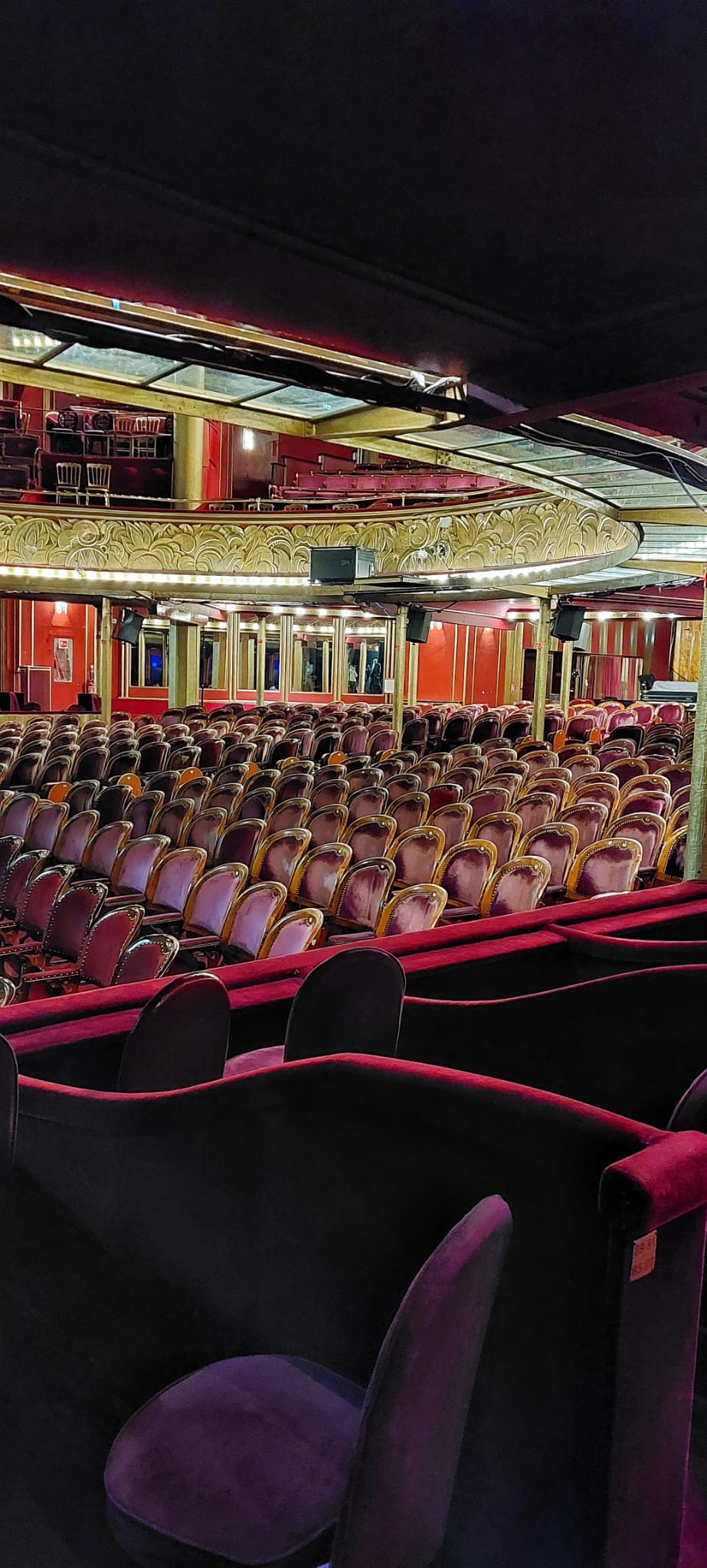
The auditorium holds around 1,600 seats spread across the orchestra (ground floor) and two balconies. Here's what audience reviews consistently say about where to sit — and where to avoid:
- Orchestra centre, front rows → ✅ The best seats, unobstructed view
- Orchestra sides and back rows → ❌ Avoid: pillars and poor sightlines
- First balcony centre → ✅ Great compromise, excellent overview of the stage
- "Carré or" (front of balcony) → ⚠️ Despite the name, not always the best choice — limited legroom and cramped seating
Good to know: if you find yourself poorly seated in the stalls, don't hesitate to ask an usher to move you to the front fold-down seats — they're used to it. In any case, ushers at the Folies Bergère are paid exclusively through tips, so do bring some cash to thank the person who seats you. It's the custom here, and always appreciated.
The Folies Bergère, Where Paris Lets Its Hair Down
Look at the glass balustrades along the first balcony. The Folies' reputation for sensuality is no accident — it is woven into the very history of the place. In the early 1900s, barely clothed dancers performed there to delight the eyes of the audience below.
The very word "Folies" harks back to the pleasure houses of 18th-century Paris, discreet retreats where the elite pursued their romantic adventures away from prying eyes. This libertine etymology hung over the theatre from its very opening in 1869.
The "revues" of the 19th century unapologetically placed women at the centre of the spectacle, adorned in costumes — or very little else. Female nudity was not only tolerated but actively promoted as a draw. In 1912, it was here that a woman appeared fully nude on a French stage for the very first time.
Did You Know? Stories from the Folies Bergère
The history of the Folies Bergère begins with a name — and a refusal. When the venue opened in 1869, it was set to be called Folies Trévise, after the nearby street. But the Duke of Trévise was appalled at the idea of his name being linked to a music hall — unthinkable at the time. The founder instead chose the next parallel street, one that bore no aristocratic name: Rue Bergère. A small act of defiance that set the tone for everything to follow.
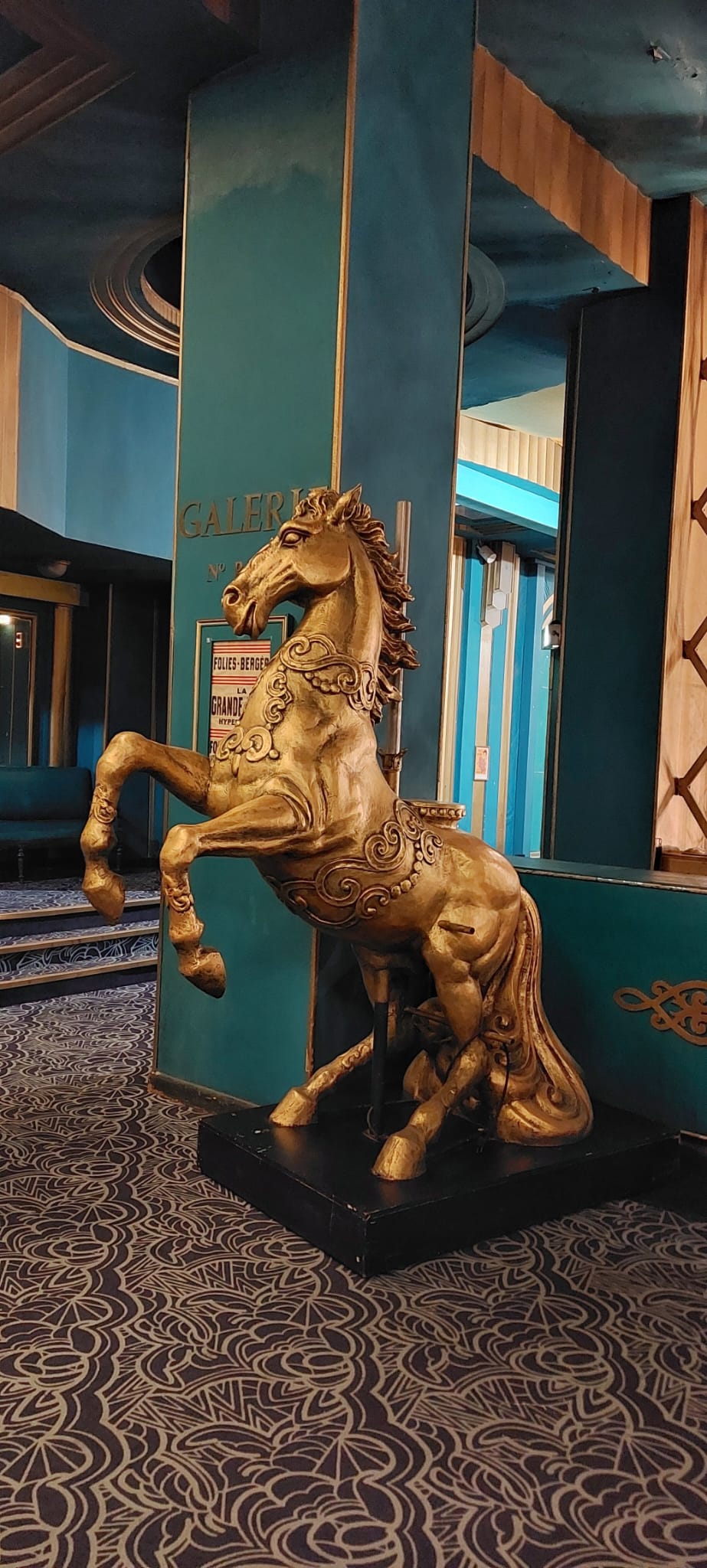
The carousel horses that greet you at the entrance are no decoration. They are the very horses from a real carousel that once spun on stage during a spectacular revue — a reminder of the breathtaking productions that built the Folies' legend. That legend includes the French cancan itself, which was not born in a theatre. Before it became a cabaret staple, it emerged in the dance halls of Paris, where women — tired of being sidelined — started dancing wildly and loudly to assert their presence. The Folies Bergère was the first stage to invite them up and let them do just that.
The legends followed one after another. Maurice Chevalier, a former acrobat from Ménilmontant, found his voice here and started singing. Mistinguett brought her sharp wit and her famous legs. And then came Joséphine Baker — who started as a seamstress, stood in for an injured dancer, and within years became one of the biggest stars in the world of music hall. Each found at the Folies the stage that would let them shine.
The building itself kept evolving. Under Paul Derval, who transformed the concept by staging spectacular full-scale revues, the Folies Bergère reinvented itself entirely. Derval also imposed a precise and poetic rule: every revue title had to include the word "Folies" and total exactly thirteen letters — a superstition turned house tradition, a mark of prestige that endures to this day.
Where to Dine Before the Show?
The Grands Boulevards are lined with brasseries and restaurants, perfect for dinner before the curtain goes up. Here are our favourite spots just steps from the venue:
- Colère (Rue de Trévise) — Generous, no-fuss cooking in a warm and convivial atmosphere. Open until midnight every day.
- La Comète (Rue du Faubourg Montmartre) — A simple, focused menu with genuine Parisian character. Open until 2am. Closed on Sundays.
Need a Parking Spot?
On a Friday evening in Paris, traffic can be unpredictable, and parking is tricky in this central neighbourhood — factor in extra time beyond the recommended 30 minutes before the show. The Folies Bergère has a partnership with the Chauchat-Drouot car park, just a few minutes' walk away — expect around €12 for 5 to 8 hours in the evening, compared to the standard rate of around €40. A rare deal in central Paris.
Where to Stay Near the Folies Bergère?
For true lovers of Parisian nights — and the Folies Bergère is very much a symbol of them — extending the evening in the Grands Boulevards neighbourhood is only natural. To head home without rushing for the last metro or hunting for a taxi, staying just around the corner makes all the difference.
Chess Studio — just a few minutes' walk away, near the Grand Rex (whose interior was also designed by Maurice Picaud, the architect behind the Folies' Art Deco façade). A stylish, well-equipped retreat for 1 to 2 guests — ideal if you're here as a couple for a special night out.
Duc de Choiseul Flat — on the other side of the Grands Boulevards (2nd arrondissement), less than 10 minutes on foot. Sleeps up to 4: the perfect option for a family or a small group of friends attending the show together.